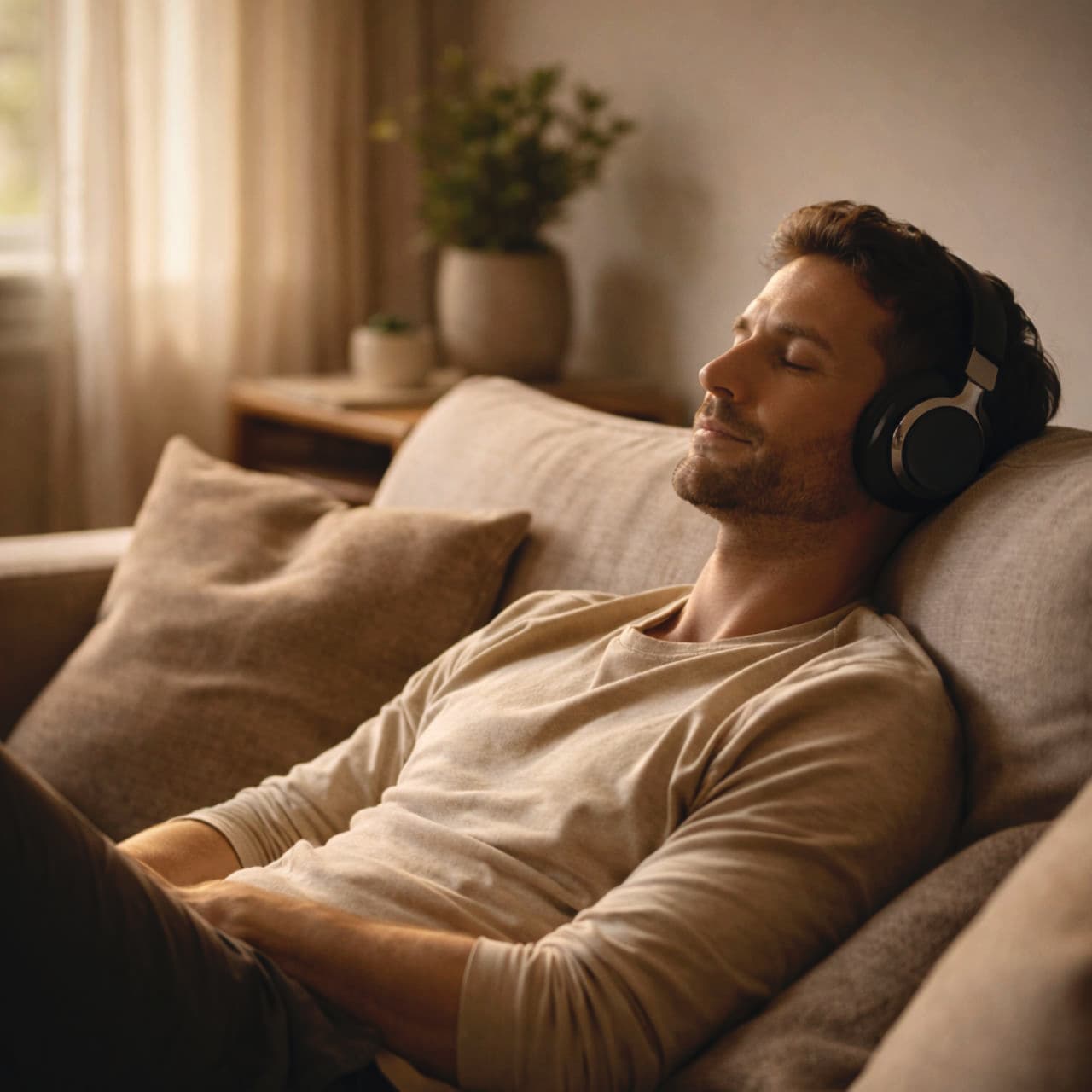
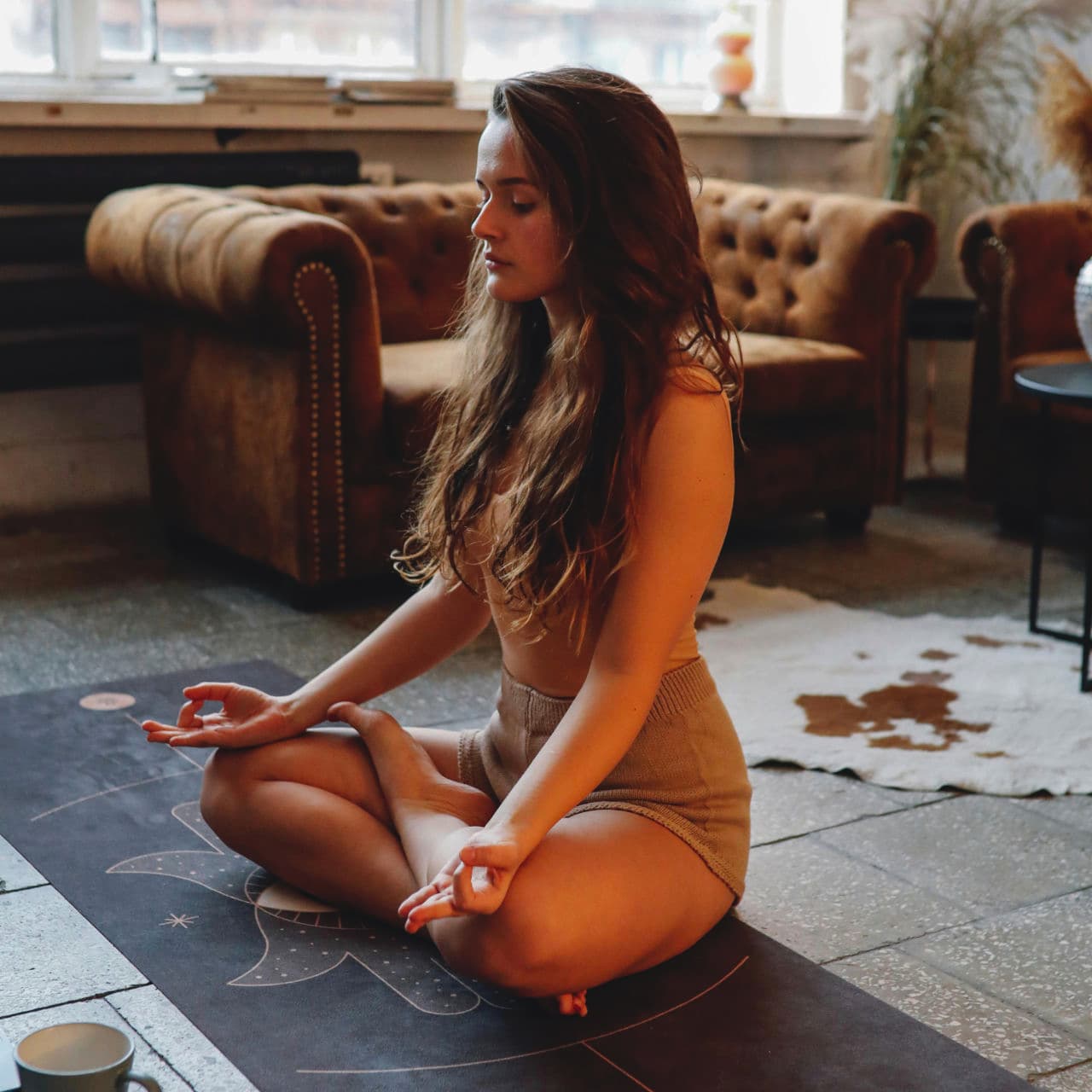
Relaxing piano is slow, lyric free piano music designed to feel steady in the background. It is not about drama or constant change. It is about shaping a calmer atmosphere for sleep, focus, and quiet moments.
In this guide, we break down the essentials of relaxing piano music, from sound choices to practical listening routines.
Relaxing piano tends to work because it stays easy to live with. There is usually no speech to decode, no crowded arrangement, and no sharp jumps that pull you out of what you are doing. The music can remain present without demanding a response.
The Psychology of Instrumental Sound
Lyrics can turn background music into a second stream of language. Even when you are not trying to listen, speech can tug at attention, especially during reading, writing, or planning. Instrumental piano avoids that. It can carry emotion without competing for your language focus.
No lyrics: fewer distractions for tasks that involve words
Predictable phrasing: less effort to follow what comes next
Space between notes: room for your attention to settle
Gentle dynamics: fewer peaks that jolt you back to alertness
How We Match Music to the Moment
For focused work, our curations favor steady tracks that help you stay in one mental lane. In the sleep selections, phrasing stays calmer, with fewer moments that stand out. For a quiet evening, we favor warmer recordings that feel natural at low volume.
Sound Design
What Makes Piano Sound Relaxing?
Relaxing piano often comes down to a few audible traits. The pace feels unhurried. The tone stays warm rather than sharp. The musical changes are easy to predict. When those pieces fit together, the sound becomes easier to live with in the background.
What to listen for
Slow movement that does not feel rushed
Warm timbre with fewer bright edges
Smooth dynamics, without sudden peaks
Simple harmony that stays predictable
The 60 to 80 BPM Standard
Many calm playlists sit around 60 to 80 beats per minute, and ours are curated with that range in mind. You do not need to count beats to use that idea. Listen for a steady pace that feels closer to resting than to action. If the track starts pushing forward, it may fit focus better than bedtime.
Quick clue: If you notice your foot tapping faster over time, the piece might be more energizing than it first seemed.
The Role of Nature Sounds
Rain, wind, and distant birds are sometimes used for a practical reason. They add soft texture that can mask unpredictable sounds in the room. The piano stays the emotional center. When a nature layer is present, it can fill small gaps, which may help in busy homes or city nights.
If you prefer pure piano: The same idea still applies. Choose tracks with a gentle attack and fewer bright highs, especially on small speakers.
Finding Your Sound
Classical or Contemporary Piano: Which Fits You?
Relaxing piano is not one fixed genre. Some listeners want the character of classical repertoire. Others prefer the steady, mood focused sound of contemporary piano. Both can feel calming. The difference is usually in structure, touch, and how the music is recorded.
Classical Piano
Classical pieces can feel soothing when the tempo is slow and the dynamics stay gentle. There is often more contrast and more nuance, which many listeners enjoy when they want to listen intentionally.
More variation and expressive phrasing
Clear beginnings and endings
Quiet repetition in select works
Often better for shorter listening
Common starting points include Erik Satie for simple patterns and Debussy for a softer, color rich palette.
Contemporary Piano
Contemporary piano is modern and atmosphere driven. You may also see labels like neoclassical, modern classical, ambient piano, or minimalist piano. The pacing tends to stay steady, which makes it easier to use for longer sessions.
Consistent patterns that hold a mood
Simpler harmony and predictable movement
Often recorded close and intimate
Fits sleep, study, and wind down routines
If you like consistency over time, contemporary piano is often the easiest match.
Comparisons
Piano, White Noise, or Lo-fi: What Works Best?
Different audio types solve different problems. Some help you feel comforted. Others are better at covering sharp background noise. If you know what you are trying to fix, it is easier to pick the right sound.
Audio type
What it does well
When it can be less ideal
Solo piano
Creates a calm mood with structure and warmth
May not mask loud environments on its own
White noise
Masks sharp, repetitive sounds and sudden spikes
Can feel sterile if you want emotional comfort
Lo-fi
Adds momentum and texture for lighter tasks
Percussion can distract during reading and writing
Piano plus rain
Combines comfort with gentle masking
Rain layers can distract if too loud or hissy
A simple choice rule
If outside noise is the main issue, start with masking. If your mind feels busy, start with a warm contemporary piano track that stays steady.
Function and Flow
How to Use Relaxing Music for Daily Life?
Our relaxing piano curations are organized as listening paths for everyday routines. Start with the goal, then choose the kind of track that fits the moment.
Stress Relief and Mindful Living
Use piano as an atmosphere tool. Pair it with a simple action so the calm has somewhere to land.
Slow breathing for ten minutes
Restorative stretching or yoga
Journaling or an evening walk
Try this: After tense moments, some people use slow music because it helps the body settle toward a calmer baseline.
For reading and writing, instrumental piano can feel structured without pulling your attention into words.
Choose steady tracks with minimal surprises
Keep one playlist for an entire work block
Try 25 minutes focus, then 5 minutes reset
Small rule: If sharp noise is your problem, white noise can mask better. If mental clutter is your problem, piano often feels easier to stay with.
If you want one steady background for a full block, try Deep Focus Piano. For pages that demand language attention, Reading Piano tends to feel quieter in the mind.
Music for Sleep and Nightly Rituals
Sleep friendly tracks are predictable. They move slowly, avoid sudden peaks, and feel gentle on your speakers.
Keep volume low and background level
Use a timer, 30 to 60 minutes is a common start
Prefer warmer tone with fewer bright highs
Volume guide: If you clearly follow every note, turn it down until it fades into the room.
For a simple start, use Deep Sleep Piano and set a timer so it fades out on its own.
For Parents
Is Calm Piano Music Safe for Babies and Toddlers?
Many families use relaxing piano music as part of bedtime because it feels gentle and familiar. The goal is usually a calm cue, not an all night soundtrack. Keeping the setup simple often works best.
Keep It Low and Steady
Volume matters more than the specific track. Aim for a quiet background level and avoid sudden spikes. Place speakers at a safe distance rather than near the crib.
Low volume, consistent level
Speaker placed safely away from the crib
Stop the music if it seems overstimulating
Use Music as a Short Sleep Cue
Many parents prefer a timer so the music ends after the child settles. This supports the routine without creating a need for constant sound. Every child responds differently, so it helps to watch what your child seems to accept.
A simple duration rule: Try music for about 20 to 30 minutes as part of the bedtime cue, then let the room go quiet again.
Choosing a Calm Vibe
If you are unsure what to play, choose a track that feels smooth and predictable. Softer tones often work well, and anything that feels bright or busy can be too stimulating at bedtime.
Slow pacing and gentle attack
Minimal surprises in volume and melody
Warm tone rather than sharp highs
FAQ
Frequently Asked Questions
What is the best type of piano music for falling asleep?
Choose instrumental piano with no lyrics, slow predictable movement, and a gentle attack. Many listeners prefer felt piano or muted recordings because the tone is softer and less startling.
How loud should my relaxing music be?
Keep it at a background level. It should soften the room, not take over the room. If you clearly follow every note, lower the volume.
What is the best way to set a sleep timer for music?
Most streaming apps include a sleep timer. A common choice is 30 to 60 minutes, long enough for wind down and sleep onset without playing all night.
Are nature sounds like rain better than just piano alone?
Often the combination helps with sleep because rain can mask sudden background noise. In a quiet room, pure piano can feel more intimate. Try both and follow what your space needs.
Does piano music help more with concentration than white noise?
It depends on your environment. White noise is strong at masking sharp sounds. Piano adds rhythmic structure and emotional steadiness, which can help some people stay in a flow state during deep work.
Why should I avoid music with lyrics while studying?
Your brain automatically processes speech. That competes with reading and writing. Instrumental music supports the atmosphere without pulling language attention away from the task.
Can piano music actually lower my stress levels?
Individual responses vary, but research has observed changes in stress related markers during slow tempo listening. Many people use calm piano as a supportive tool for unwinding and recovery after demanding moments.
How can I incorporate piano music into my meditation?
Use the piano as an anchor, not a performance. Choose soft tracks with long sustains and minimal melodic jumps. Let the sound sit behind your breath rather than pulling attention forward.
Does the type of piano matter?
Yes. An acoustic grand piano can feel rich and spacious. A felted upright often sounds more muted and intimate, which many people prefer for sleep and quiet evenings.
What is the difference between classical and neoclassical piano?
Classical piano often follows historic forms and complex structures. Contemporary piano is modern and mood focused, and is often described as neoclassical or modern classical. It tends to stay consistent, which is why many relaxing playlists lean in that direction.
Who are some famous composers of relaxing piano music?
Historic favorites include Erik Satie and Claude Debussy. Modern names many listeners associate with relaxing piano include Ludovico Einaudi, Yiruma, and Max Richter.
Is healing frequency music backed by science?
Specific tunings like 432 Hz are popular in wellness circles, but the most reliable factors behind relaxing music are usually tempo and timbre, along with predictability and simple harmony. If a track helps you feel calm, that experience is valid without dramatic frequency claims.
Resources
Sources and Further Reading
This list is meant to support the guide above. It covers relaxation, attention, tempo, and listening features like lyrics versus instrumental sound, without turning research into sweeping promises.
Music and stress markersThoma, M. V., et al. (2013). The effect of music on the human stress response. PLoS ONE.View on PubMed
Tempo and physiological recoveryBernardi, L., Porta, C., & Sleight, P. (2006). Cardiovascular, cerebrovascular, and respiratory changes induced by different types of music. Heart.View on PubMed
Meta analysis: music and reduced stress arousalPelletier, C. L. (2004). The effect of music on decreasing arousal due to stress: a meta-analysis. Journal of Music Therapy.View on PubMed
Lyrics and cognitive interferenceSouza, A. S., et al. (2023). Should We Turn off the Music? Music with Lyrics Interferes with Cognitive Tasks. (PubMed record).View on PubMed
About
Curating Relaxing Piano Music
The Calm Key is an independent editorial project focused on curating relaxing piano music. It highlights contemporary, classical, and minimalist solo piano chosen for calm routines, focus, and mindful listening. Every selection is human reviewed for gentle dynamics, stable harmony, and a smooth flow. Tracks with vocals, heavy percussion, or sudden peaks are avoided. No paid placements.