Piano for Relaxation
Soft solo piano for release and quiet stillness.
Save this Playlist on
Relaxing Piano
Some piano tries to tell you how to feel. This does not. It is unforced, rounded, and patient, with small shifts in harmony that soften the room while you do something ordinary.
- Rounded attacks and warm tone set a low contrast baseline
- Phrases settle rather than push forward
- Harmony drifts gradually, with few sharp turns
- The mood holds from track to track, no reset moments
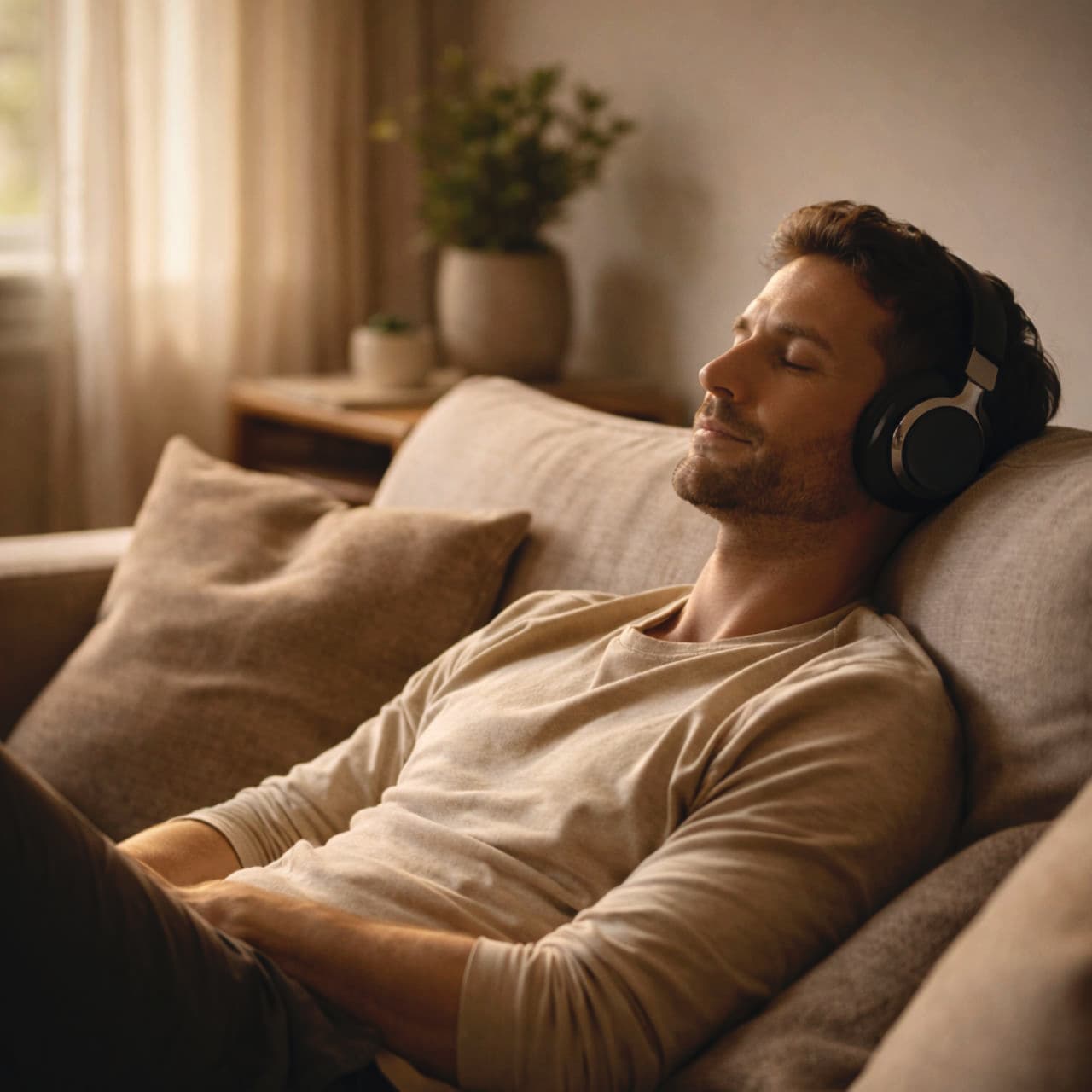
What this relaxing playlist feels like
This is piano for easing tension, not for making a statement. Warm, even, and easy to keep on, with gentle movement that helps the room soften without demanding a response. If you’re already in bed, Deep Sleep Piano fits better.
Soft and calm
Unwinding, quiet tasks, stress release
Deep Focus, critical listening
8 hours
The easiest upgrade
Adjust the room before you adjust the playlist. Lower the light, clear one surface, and silence notifications. A calmer environment makes the same music feel more relaxing.
What is Piano for Relaxation?
This style is not about big moments or dramatic turns. Piano for Relaxation is gentle solo piano with an unhurried pace, made for evenings when you want the room to soften while you stretch, make tea, or let the day drop off your shoulders.
Learn how to set the tone gently, then tweak it when your mind stays busy or calm feels out of reach.
How to get the most out of relaxing piano?
Treat it like atmosphere. Keep it simple, keep it consistent, and reduce extra input around it. The goal is to make relaxing feel effortless.
A quick unwind checklist
- Lower the lights and remove one small distraction.
- Start the playlist quietly and let it run.
- Pair it with something slow, like tea, stretching, or tidying one corner.
- If you still feel on edge, reduce input first before you change the music.
Keep it at background level
Most people go louder than they need. If you can follow every note without effort, it is too present. Reduce it until it feels like part of the space.
Pair it with a slow task
Tea, stretching, a shower, a few pages, or tidying one drawer. One low effort action helps your body catch up to the calmer pace.
Use it as a boundary
Let the first track mark the end of input. Stop checking news, stop responding, stop optimizing. Relaxing comes easier when the number of decisions drops.
If it is not working, reduce stimulation
Before you switch tracks, change one thing outside the music. Dim the room, close extra tabs, and sit differently. Small environmental changes often do more than a new track.
When does relaxing piano work best?
Relaxation is situational. Use this playlist as a calm layer that matches the pace you want to return to.
After work reset
Put it on while you change pace, make food, and let the day unwind. Gentle piano works best when you do not ask it to entertain you.
Slow evening at home
Journaling, light chores, stretching, or doing nothing on purpose. Let it stay in the background while the room gets quieter.
Reading support
If you like piano while reading, keep it minimal and quiet. For a page first approach, use our reading piano playlist.
Which piano style is best for relaxation?
When you are trying to unwind, variety can feel like noise. Start with the style that stays consistent and warm, then only move toward more expressive playing if it truly relaxes you rather than inviting you to listen closely.
Contemporary piano
Modern, minimal, and steady. Great when you want calm atmosphere without strong narrative or tension.
Soft classical piano
Expressive and familiar. Works beautifully if it comforts you, less so if it makes you follow themes and changes.
Fast comparison
Pick the style that lets your attention drift back to the room instead of the music. If you notice yourself following themes, choose the calmer, more even option.
| Style | Key characteristics | Impact on relaxation | When to choose |
|---|---|---|---|
| Contemporary piano | Minimal, mood based, restrained dynamics | Low attention pull for many listeners | Best default for unwinding |
| Soft classical piano | Repertoire, clearer structure, emotional arcs | Can calm or engage depending on the piece | If it comforts you and stays gentle |
| Vocal or pop | Lyrics, hooks, bigger energy shifts | Higher cognitive load through words and attention triggers | Not recommended for unwinding |
For relaxation, fewer inputs matter more than perfect choices.
What can you do when relaxing feels difficult?
Relaxation is not something you have to force. Treat this as a small reset for the room, then let the piano sit in the background while you do something simple.
If the music feels too present
- Move the sound farther away and lower the volume slightly. A warmer tone with less detail usually blends better.
- Let a few tracks pass without judging. The first minutes are often the noisiest part of your day, not the playlist.
- If you keep listening actively, pair it with a small task like stretching, tea, or tidying one surface.
If you cannot unwind
- Lower the stimulus before you change the playlist. Dim the lights, put your phone out of reach, and close one extra tab.
- Pick one gentle activity for ten minutes, take a shower, write a few lines, or read a couple of pages. Then check how you feel.
- If you want a smoother start, begin from the top and keep it running without track hunting.
How this relaxing playlist is curated
This playlist is made for comfort that stays easy. It keeps the tone warm, the dynamics gentle, and the flow steady so you can unwind without the music asking for attention.
Gentle dynamics
Sudden peaks and sharp contrasts are kept out. A flatter dynamic range feels calmer in a room.
Low contrast flow
The order is set to feel continuous and predictable. It should play like one long, calm thread.
Calm tonal center
Harmony stays stable and the arrangements stay uncluttered. Fewer sharp turns make it easier to settle.
What we do not promise
Music can support relaxation, but it does not work the same for everyone. If this playlist helps, treat it as one part of your routine, not the only tool.
Questions about relaxing piano
Why is piano music so relaxing?
Piano notes naturally fade rather than cut off, which can make the sound feel soft and unforced. That gentle decay helps the room settle.
Does listening to piano music help with anxiety and stress?
It can help some people feel less tense by giving the mind something simple to rest on. It is not a clinical treatment, but it may support a calmer atmosphere during stressful moments.
What is the best tempo for relaxation?
Most relaxation playlists sit around 60 to 80 beats per minute because the pacing feels unhurried. It often overlaps with a typical resting heart rate range, which some listeners experience as more settling.
Is solo piano better than an orchestra?
Solo piano reduces layers and competing textures, so there is less to track. That simplicity can feel easier to live with in the background than a full ensemble.
Can I use this playlist for mindfulness?
These melodies can work well for informal mindfulness. Keep the volume low, let the music sit behind your breathing, and use it mainly to soften background noise. If you want a more practice centered feel, Meditation Piano is a better match.
What is "felt piano"?
Felt piano usually means a soft layer is used to mute the attack of the hammers. The result is a quieter, warmer tone that feels less bright and less percussive.
How long should I listen to relax?
Even fifteen to twenty minutes is usually enough to notice a change. Treat it as a small reset, then decide whether you want to keep it on as background or stop when you feel settled.
Sources and further reading
If you like the softer side of piano, these readings add context for what many listeners describe as “settling.” They touch on stress response and recovery, and why slow, uncluttered music can feel easier to live with.
- Music and stress response Thoma, M. V., et al. (2013). The effect of music on the human stress response. PLoS ONE. View study
- Physiological changes induced by music Bernardi, L., Porta, C., and Sleight, P. (2006). Cardiovascular, cerebrovascular, and respiratory changes induced by different types of music. Heart. View study
- Music and stress arousal Pelletier, C. L. (2004). The effect of music on decreasing arousal due to stress: a meta-analysis. Journal of Music Therapy. View study